
Junhui (Daniel) Hu, MD, PhD
Associate Project Scientist
Molecular and Medical Pharmacology
University of California, Los Angeles
junhuihu [at] mednet.ucla.edu
Kidney cancer kills when it spreads. I study the cells that drive clear cell renal cell carcinoma (ccRCC) metastasis and the drugs and cell therapies that can stop them. Trained as a urologist and cancer biologist, I work between the mouse, the chick embryo, and the clinic to turn metastatic kidney cancer into a disease that stays local.
Research
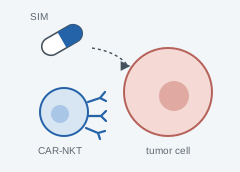
Therapy · how to stop it
Targeting the metastasis-driving subpopulation works better than targeting every cancer cell. A 12,000-compound screen pointed to older statins, now being developed as selective inhibitors of metastasis (SIM) through a non-cholesterol pathway. In parallel, with immunology collaborators, CD70-directed allogeneic CAR-NKT cells hit tumor, microenvironment, and alloreactive T cells at once.
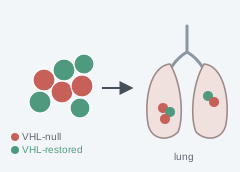
Metastasis · how it spreads
Tumors are mixtures. By labelling VHL-null and VHL-restored ccRCC cells in different colors and following them in mice and on the chick chorioallantoic membrane, I found that the two populations cooperate to reach the lung, and that HIF-1α in the proliferative partner, not HIF-2α, drives the process. The immunocompetent mouse and CAM models built for this are now used across the lab.
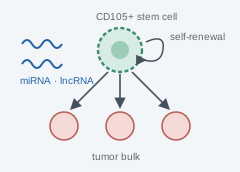
Origins · where ccRCC comes from
A small population of CD105+ cancer stem cells can rebuild a ccRCC tumor and survive chemotherapy. I showed that endoglin itself keeps these cells self-renewing and drug-resistant, and mapped the microRNA and lncRNA circuits (miR-34a, MALAT1, PVT1, SETD2/miR-335) that regulate them in kidney and bladder cancer.
Education
- MD/PhD, Urology, Tongji Medical School, HUST
- B.E., Computer Science, HUST
- Postdoctoral training, Pharmacology, UCLA
Award
- Boyer/Parvin Postdoctoral Award, Molecular Biology Institute, UCLA, 2025
Beyond the lab
Rock climbingSwimmingBotanyPhotography
Gallery → landscapes, plants, and cells under the microscope